Obituary
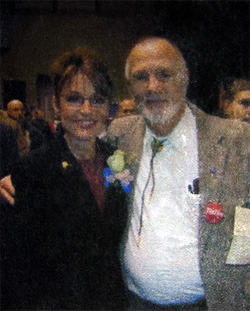 Ed with Governor Sarah Palin
Ed was born September 9, 1931 to Frederick and Amelia (Mildred) Martin of Brooklyn, New York. He passed away in Soldotna after having a heart attack following surgery. Ed served in the Korean War as a Navy submarine 3rd class petty officer enginemen, honorably discharged. He was proud of his service and gladly shared how it taught him critical thinking, and responsibility. Ed was a pioneer Alaskan homesteader north of Willow near the Kashwitna River and enjoyed sharing stories of his perilous adventures. Ed was a 50 year member of IUOE Local 302 and worked on numerous construction projects throughout Alaska beginning with the original construction of the Parks Highway, and upgrades to the Dalton, Glenn, Richardson, Seward, and Sterling Highways. He also helped build the Alaska pipeline working from Prudhoe Bay south. Ed had his own construction company in the late 70’s and early 80’s called Kasu Construction which built numerous subdivision roads around the Mat-Su Valley.
He served as a Mat-Su Borough Assemblyman and on the Mat-Su’s original Planning and Zoning Board. He campaigned to be a State Senator and lost to Jay Kertulla by a handful of votes. Ed’s political activism included the Move the Capital Initiative (from Juneau to Willow). He later became the city of Wasilla Public Works director during the 1980s boom. Ed was instrumental in his retirement years for establishing, with others, the Save the Permanent Fund Petition Drive, then went on to testify in front of the legislature with petitions in hand which resulted in an advisory election vote. That election resulted in an overwhelming vote of the people for the protection of the permanent dividend program we enjoy today. Ed liked to watch the news on TV and routinely voiced a concern for the less fortunate among us in issues around the State & Nation.
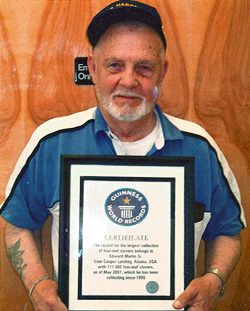 Ed with his Guinness World Record certificate
Ed believed that “Alaska was the luckiest place on earth,” particularly the Kenai Peninsula. Although Ed was an avid hunter and fisherman in his younger years, he enjoyed the company of his pets, Pumpkin and Quits prior to moving into the Sterling Senior Center. Ed’s family and all Alaskans will miss him.
Services at Sterling Senior center on the 27th of April at Noon. For info please email akgoldnuggets@gmail.com.
Spirit of the Race
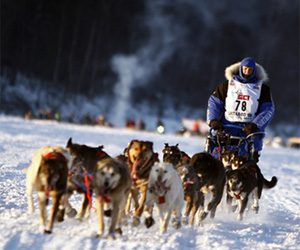
The annual dog sled race in Alaska, the Iditarod race, is held the second Saturday in March each year. The race starts in Anchorage with the finish line in Nome, approximate distance of 1,200 miles.
Alaska Classifieds
Iditarod
Alaska is the largest state of the United States by area; it is situated in the northwest extremity of the North American continent, with Canada to the east, the Arctic Ocean to the north, and the Pacific Ocean to the west and south, with Russia further west across the Bering Strait. Approximately half of Alaska's 698,473 residents live within the Anchorage metropolitan area. As of 2009, Alaska remains the least densely populated state of the U.S.
Alaska News (Top Stories)
Classified Ads
Featured Ads
Contact for pricing
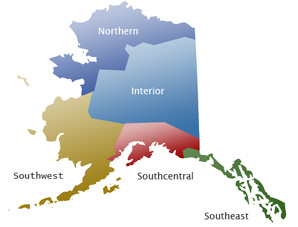
Regions of Alaska

Travel Guide
Request your free Alaska Travel Guide
Page after page of official Alaska travel information - chosen just for you!